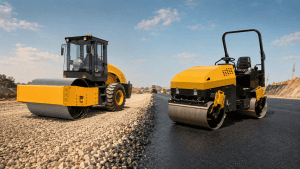
Choosing between a single drum roller and a double drum roller is an important decision for road contractors, rental companies and equipment distributors. Although both machines use vibration and static weight to compact construction materials, their structures and typical applications are different.
Understanding these differences can help you select a roller that delivers better compaction efficiency, surface quality and jobsite productivity.
What Is a Single Drum Vibratory Roller?
A single drum vibratory roller normally has one steel drum at the front and two pneumatic tires at the rear. The front drum applies vibration and static pressure to the material, while the rear tires provide traction and mobility.
Single drum rollers are commonly used for compacting:
- Road subgrades
- Gravel layers
- Sand and aggregate mixtures
- Cement-stabilized soil
- Building foundations
- Trench backfill
- Industrial yards
- General earthwork
The combination of a vibrating front drum and rear tires makes this type of roller particularly suitable for granular materials and uneven ground.
LUXIN single drum rollers include compact models for municipal work as well as heavier machines such as the LX06JS 6 ton and LX08JS 8 ton rollers.
What Is a Double Drum Roller?
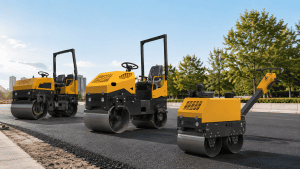
A double drum roller, also known as a tandem roller, has steel drums at both the front and rear. This configuration provides a smooth contact surface and allows the machine to compact material without leaving tire marks.
Double drum rollers are widely used for:
- Asphalt paving
- Municipal roads
- Parking lots
- Road maintenance
- Residential streets
- Industrial surfaces
- Pavement finishing
Depending on the model, vibration may be available on the front drum only or on both drums. Buyers should not assume that every double drum roller has dual-drum vibration.
For example, some compact LUXIN tandem rollers use front-drum vibration with a static rear drum, while other models allow front-and-rear vibration.
Main Differences Between Single and Double Drum Rollers
Drum and Tire Configuration
A single drum roller uses one front steel drum and rear pneumatic tires. A double drum roller uses steel drums at both ends.
The rear tires of a single drum roller provide strong traction on soil and aggregate. The two smooth drums of a tandem roller provide a cleaner finish on asphalt.
Suitable Materials
Single drum rollers are generally better suited to soil, gravel and road-base materials. Double drum rollers are normally preferred for asphalt and finished pavement surfaces.
Surface Finish
A tandem roller can produce a smoother surface because both ends of the machine contact the pavement through steel drums. A single drum roller may leave tire impressions on soft asphalt and is therefore less suitable for final asphalt finishing.
Jobsite Mobility
The rear tires of a single drum roller provide good climbing ability and mobility on rough or loose ground. Double drum rollers perform best on relatively level, prepared surfaces.
Vibration Configuration
A single drum roller usually vibrates through the front drum. Double drum models may have:
- Front-drum vibration only
- Front and rear vibration
- Selectable single-drum or dual-drum vibration
The exact vibration configuration should always be checked in the technical data sheet.
Which Roller Should You Choose?
Choose a single drum vibratory roller when the main materials are soil, gravel, crushed stone or stabilized base materials. It is usually the more practical choice for road foundations, earthwork and large infrastructure projects.
Choose a double drum vibratory roller when the main task is compacting asphalt or creating a smooth finished surface. It is suitable for roads, parking areas, driveways and pavement-repair projects.
For projects involving both soil preparation and asphalt finishing, contractors may need both types of rollers.
Other Factors to Consider
Before purchasing a roller, evaluate:
- Required operating weight
- Working width
- Vibration frequency
- Exciting force
- Drum diameter
- Engine power
- Turning radius
- Water-spraying system
- Available transport space
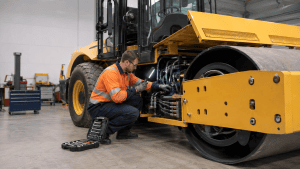
- Local parts and service requirements
A heavier machine is not automatically the best choice. The roller must match the material type, layer thickness and available working space.
Frequently Asked Questions
Can a single drum roller compact asphalt?
A single drum roller can perform certain asphalt repair and initial compaction tasks, especially when equipped with a water-spraying system. However, a tandem roller is normally better for final asphalt compaction and surface finishing.
Does a double drum roller vibrate on both drums?
Not always. Some models vibrate only through the front drum. Confirm the “Vibrating Drum” specification before purchasing.
Which roller is better for gravel?
A single drum vibratory roller is generally better for compacting gravel, aggregate and road-base materials.
Which roller is better for parking lots?
A double drum or tandem roller is normally preferred because it provides a smooth surface without leaving tire marks.
Find the Right LUXIN Roller
LUXIN supplies walk-behind, ride-on, single drum, double drum and remote-controlled compaction equipment for different construction requirements.
Contact LUXIN with your material type, required working width and project conditions to receive a suitable machine recommendation and quotation.